History of Government Faridia Graduate College, Pakpattan
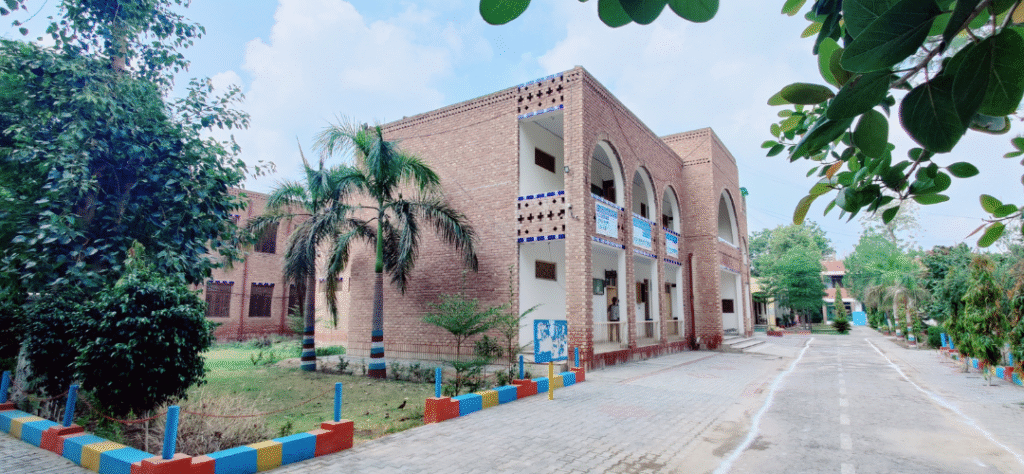
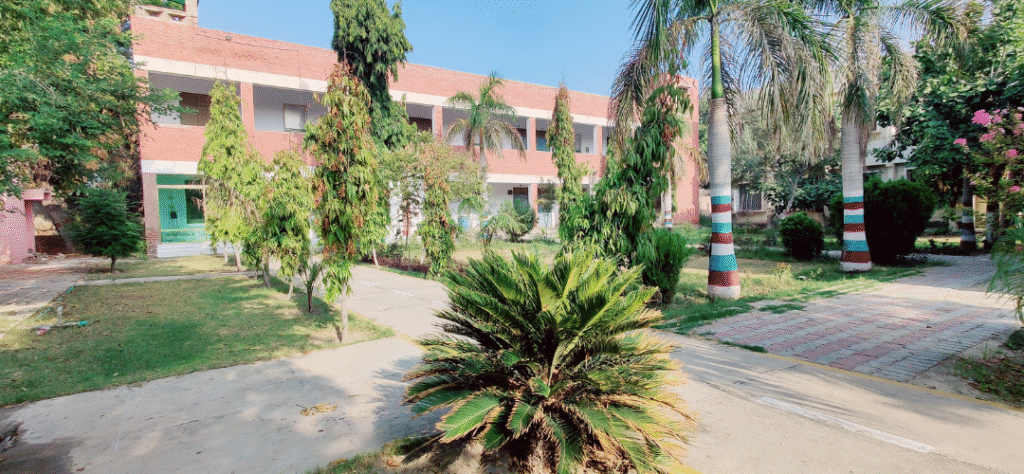
The Government Faridia Graduate College, Pakpattan, was established in the city of Baba Farid Shakar Ganj, a land of saints formerly known as Ajodhan and Garwah. The foundation of Faridia College was laid in 1967, and regular classes officially commenced on September 20, 1967.
1. Foundation and Early Administration (1967)
The college was founded in the old building of the Samadhi (shrine/sanctuary), with the foundation stone being laid by Mr. Farooq Ahmad Khan Leghari, who was then the President of the Anjuman Faridia and the Assistant Commissioner.
Key Patrons:
Mian Ghulam Muhammad Ahmad Khan Maneka (Federal Minister)
Mian Nazar Farid Ahmad Khan Maneka (Chairman and driving force of Anjuman Faridia)
Anjuman Faridia Management:
Syed Shamshir Ali Shah Advocate (Secretary)
Founding Members: Rao Muhammad Hashim Khan, Maulvi Manzoor Ahmad Advocate, Haji Bismillah, Chaudhry Khushi Muhammad, and Khan Muhammad Azeem.
2. The First Principal and Staff
The first Principal of the college was Mr. Abdul Hameed Khan, who concurrently served as Principal of Islamia College Chowk and Islamia College Kamalia.
-
Initial Staff Members: Ali Azhar Naqvi, Ghulam Yaseen Khan Afghani, Habib Ullah Vazir Manzoor Ahmad, Mian Abdul Bari, Shaukat Ali, and Rasheed Ahmad Chaudhry.
-
Non-Teaching Staff: Muhammad Akbar (Accountant), Bahadur Ali Shah (Clerk), and Rao Muhammad Shabbir (Peon/Messenger).
3. Predecessor and Transition
Prior to the establishment of Faridia College, some philanthropists had established Islamia Faridia College in Sarai Bismillah and started first-year classes. This college was subsequently closed due to certain reasons. These students were then transferred to Faridia College, and some members from the Mandi area were inducted into the Anjuman Faridia.
4. The Grand Building (The Samadhi Structure)
The magnificent building that housed Faridia College was originally a Hindu place of worship (Samadhi). Its architectural features were stunning:
Main Entrance: The iron gate leading to the Principal’s residence was replaced by a large wooden door, a portico (Deorhi), and two adjacent rooms.
The Three-Storey Structure: Located near the Peepal tree, there was a huge wooden gate leading to a three-storey building with large windows and beautiful balconies, reminiscent of the Jharokha Darshan style.
Natural Landmarks: An old, solitary date palm tree (Khajoor ka darakht) stood to the west of the Peepal tree, which is still visible today.
Interiors: Upon entering, there was a long portico with a roof level with the second floor. Both sides of the portico featured beautiful colonnades and staircases leading to the upper floor, which housed four large classrooms.
Principal’s Office: Facing the portico was another three-storey building situated on a large platform (Chabutra). The Principal’s Office had about ten wooden doors, coloured glass ventilators, and decorative verandas on both sides. Attached to the office were two rooms for the clerical staff, and a very large room on the upper floor for the Principal’s residence.
A Local Legend: It was locally famous that the Principal’s Office was a haven for jinns and ghosts.
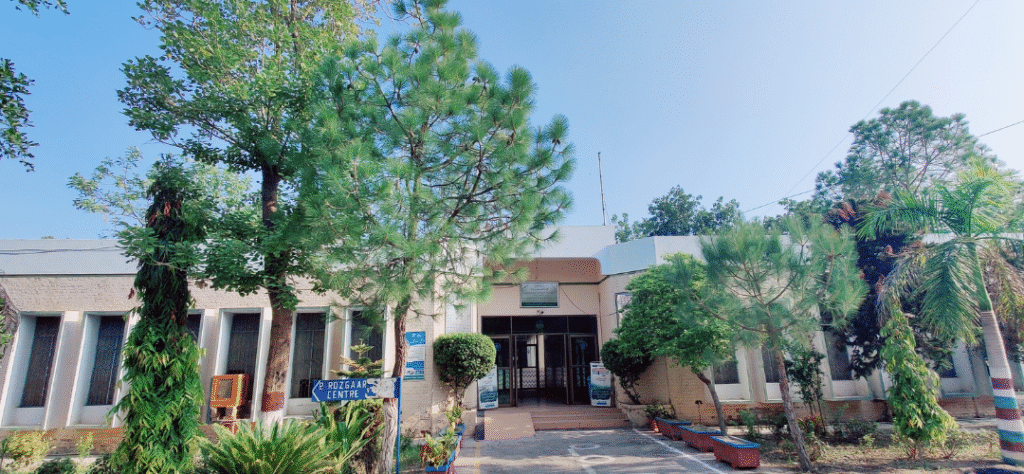
Campus Facilities
Staff Room: Located opposite the Principal’s Office.
Laboratories and Classrooms: Science laboratories and classrooms were on the right side of the staff room.
Library: The Zarreen Abbas Library was situated between the classrooms, named after a deceased student.
Stage: A stage was built behind the office for declamation contests, debates, and variety programs.
Hostel: An entirely separate portion with approximately twenty large and small rooms and an open field in the center was converted into a hostel.
College Mosque: The location of the college mosque was originally a temple. A minaret was added to convert it into a mosque. Later, the Ali Trust built a beautiful new mosque.
The Pond (Talaab): Shabbir Ahmad Bukhari (Director Colleges, Multan Division) mentioned that the famous play “Shakuntala” by Kalidas was written while sitting by the bank of this pond.
Change of Leadership and Growth (1970s onwards)
Mr. Saeed Ahmad Khan: Due to administrative issues with Mr. Abdul Hameed Khan (who was simultaneously principal of three colleges), Mr. Saeed Ahmad Khan, with thirty years of teaching and organizational experience, was appointed as the new Principal. During his tenure, the student population and staff size significantly increased.
Staff Departures: Many staff members left during this time: Syed Mir Muhammad Shah (Islamiyat Dept.) joined, while Mr. Sadr Ali (English Dept.) went to FC College Lahore, Sheikh Bashir Ahmad (Political Science Dept.) returned to Multan, Chaudhry Habib Ahmad (Math Dept.), and Mr. Khadim Hussain (Physics Dept.) went to Islamia College Sahiwal.
Staff Members as Principals
Ghulam Yaseen Afghani and Habib Ullah Vazir served as Principal one after the other, twice, due to their competence and organizational skills. They both worked hard to beautify the college with plants and flowers.
Nationalization (September 1, 1972)
Colleges were nationalized on September 1, 1972, bringing job security and financial relief to thousands of employees. However, the Anjuman Faridia maintained a principled and compassionate attitude, deserving of high praise.
Subsequent Principals and Notable Staff
The college continued to be led by many distinguished scholars and administrators:
Mr. Maqsood Ahmad: Served as Principal for a few months, known for his kind heart (he once fainted when a student was injured).
Professor Muhammad Kamil Siddiqui: (History Professor) Served as Principal and later became Director Colleges, Bahawalpur.
Other Notables: Jafar Ali Bhatti (left after being selected for PCS), Syed Wajid Gilani, and Syed Javaid Haider (described as diamonds of the college).
Other Principals/Scholars: Khalid Javed, Dr. Sadiq Hussain Nadeem, Sajad Ahmad, Mukhtar Ahmad, Muhammad Bashir, Dr. G.M. Malik, Mumtaz Ahmad Khan (a strict Principal), Azmat Ali Akhtar (Urdu Dept.), Abdul Rasheed Farooqi, Prof. Haji Muhammad Qasim, Mr. Abu Muzaffar Ghulam Moeenuddin, Muhammad Ilyas Qureshi, and Muhammad Ayub Akbar Chishti.
The Golden Era
Mr. Muhammad Anwar Khan (April 21, 1996 – May 18, 1998): Belonged to the Economics department and transferred from Govt. College Sahiwal.
Professor Rasheed Ahmad Chaudhry (May 18, 1998): Took charge as Principal.
Rana Tariq Aziz Nasir: Served as Principal during a transformative period. In his time, Faridia College achieved every possible milestone and emerged as a Model College in Punjab.
Recent Leadership and Achievements
- Abu Muzaffar Sahib: Became Principal on October 11, 2003
- Other Recent Principals: Malik Tariq Mahmood, Ali Akbar Ghuman, Professor Rana Tariq Aziz, and Muhammad Rafique Qaiser.
- Current Principal: Dr. Professor Masood Al Sharif.